Showing posts with label resources. Show all posts

Monday, April 1, 2013

Tracking Student Progress...

I'm always looking for meaningful ways to track student progress that are simple to create and utilize in the classroom. Tracking student progress allows both teachers and students to examine increases in knowledge towards a learning goal. Teachers can use multiple informal assessments to quickly assess progress being made on a daily basis and to adjust instruction. Moreover, students are able to make connections to learning goals and their learning progress. Most importantly, however, tracking student progress helps students to take responsibility for their learning. 

During my junior internship, I was able to work with an amazing team of 3rd grade teachers that developed an efficient system to track student progress. For each student, the teacher created cards for each learning goal. The cards included the learning goal, customized scales, and a bar graph for the student to track their progress. 
Prior to, during, or after a lesson the students would track their progress. Students would fill in the date, use the scale to determine where they felt that they were in attaining their learning goal, then shade in the bar graph to the corresponding number on the scale. Students used a 3x5 index card box to store their individual tracking progress cards and separated the cards by subject area.  
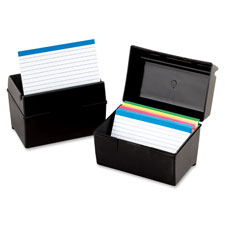
Once you create the initial set of cards, the system is simple to use and effective. The teachers and students were able to visualize student progress. Also, students could re-visit learning goals throughout the year.  Some students showed that they met their learning goal on their individual bar graphs, but they were not able to demonstrate their knowledge on a formal assessment. Students and teachers can use both the bar graphs and formal assessments to reflect on the student's progress and set new learning goals. The graphs provide great data for teacher/student conferences and/or parent conferences.  

In my senior internship, I used a similar system to track student progress for a various standards units. Below is a Social Studies example. Although I love using individual bar graphs to track student progress, I've learned that we should use a variety of techniques to track students' progress both informally and formally in the classroom.

Monday, March 25, 2013

Prezi as a Presentation and a Teaching Tool...

Prezi can do so much for an educator...engage all students, chunk information into digestible bites, develop 21st century skills. I love to use Prezi as an interactive graphic organizer in the classroom. When I design my lessons using Prezi I am able to organize images, videos, and other resources into a story line to create a dynamic visual representation of valuable knowledge, concepts, or ideas for my students.

I've had the opportunity to share this valuable tool with pre-service teachers and public school teachers at my university and at a local elementary school. Initially, presenting in front of a group of my peers seemed daunting, however educators were enthusiastic to learn how to "Prezify" their lessons and presentations. Many of the attendees of these workshops continue to stay in touch, I love to hear their stories about how they are using this amazing tool in the classroom. 
Explore a variety of resources and examples on how educators and students can use Prezi in their schools.


Thursday, February 28, 2013

A Unit on Figurative Language...


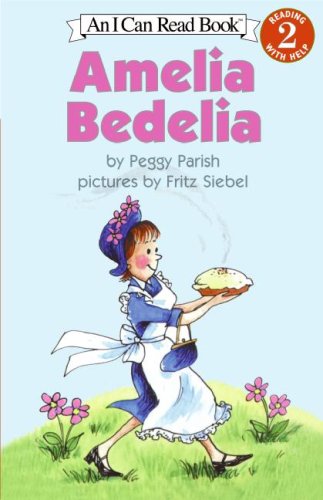
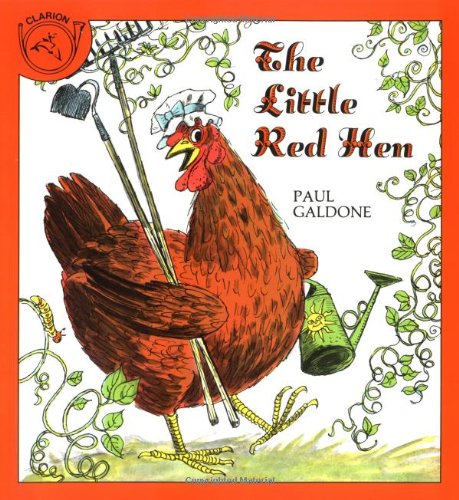
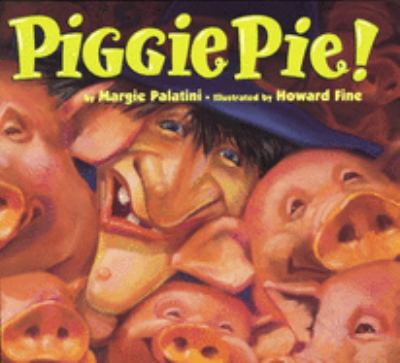
Recently, I used this Prezi and a variety of children's literature to explore different types of figurative language with my 3rd graders. After reviewing the definitions and examples of one type of figurative language in the Prezi, we examined how author's use this type of figurative language in context. Sometimes, we read the entire text, sometimes we read snippets of the text, and sometimes we read the text 2 or 3 times. Some of the books we used include:
Some Smug Slug by Pamela Duncan
Amelia Bedelia by Peggy Parish
The Little Red Hen by Paul Galdone
The Little Red Pen by Janet Stevens and Susan Stevens Crummel
Bedhead by Margie Palantini
Piggie Pie! by Margie Palantini
Cloudy Chance of Meatballs by Judi Barrett
“Ode to Pablo’s Tennis Shoes” by Gary Soto
Shel Silverstein's poems


Then students became writers themselves as they created their very own Figurative Language Flipbook. Each "flip" was designated for a different type of figurative language. The students had to include the definition of the type of figurative language, at least one original example, and a picture to support their example(s). When complete with each flip the students would assess themselves using a rubric. 

This was, by far, one of the more enjoyable lessons for both me and the students that I've taught this year. Between the Prezi, the music video, the books, and the student's Figurative Language Flipbook, the students were completely engaged. The student rubric helped the student's to take ownership and reflect on their work. The students continued to sing the figurative language song throughout the day. They loved to tell me when they heard someone use figurative language or when they spotted it in a story. In fact, they loved it so much that we had to come up with a silent hand signal. To this day, when we hear figurative language we'll quietly touch our nose and smile!

Friday, August 31, 2012

Prezi Webquest

Last semester I had the opportunity to create a 4th grade Social Studies unit plan about Florida explorers with a group of my peers. We created a Webquest using Prezi (one of my favorite presentation tools). To kick off the unit, we created a Prezi on Christopher Columbus, a familiar explorer for many 4th grade students. During this presentation, the teacher will also model important presentation skills that the students will be assessed on when they present at the end of the unit. After the Christopher Columbus presentation, the students will break up into groups and learn about a Florida explorer. Students will use teacher approved websites using diigo, graphic organizers, and various multimedia tools to create a presentation about their explorer. Throughout their learning journey the student groups will follow the step by step directions stated on the Prezi Webquest. The entire unit plan, including printables and other resources can be found here: http://ucfgr4flexplorerssp12t.wikispaces.com/ Although we tried to plan our activities across the curriculum, looking back it is apparent that we had too many activities for a 5 day unit plan. In the real classroom this unit would require 2-4 weeks. Overall, completing this unit plan was a great experience. I learned so much from this project and my peers. I cannot wait to put these ideas into action in a real classroom.

UPDATE: After completing our course, my peers and I had the opportunity to present our unit plan at our university. Below is the Prezi we created for the workshop.

Friday, August 17, 2012

Make a Cloud in a Cup Lesson Plan


A second grade science lesson inspired by The Schroeder Page and based on the National Science Education Standards (NSES), Next Generation Sunshine State Standards (NGSS), Common Core State Standards (CCSS) and Florida Educators Accomplished Practices (FEAPS).


Island Inequality Mat Lesson Plan-Modified for English Language Learners

Thursday, August 16, 2012

Vietnam, A Cultural Handbook

As an educator it is important we become aware of the wide diversity within various cultural groups. Teachers must utilize cultural information without depending upon stereotypes and preconceived ideas concerning cultural characteristics to instruct students. I had the opportunity to work with a group of my peers to study one of the fastest growing populations in Central Florida, the Vietnamese culture. This Cultural Handbook is written for educators about the Vietnamese culture.

Tuesday, June 26, 2012

FCRR: Florida Center for Reading Research


http://www.fcrr.org/ is another fantastic website for teachers. This site provides a lot of information on best practices used to teach and assess reading it. I've found the intervention strategies for struggling readers very helpful. However, my favorite resources is the student center activities page. Lots of printables for centers and all of the activities are aligned to the common core!

Tuesday, June 12, 2012

Fun Math Website...


Big Brainz is a great website for multiplication practice!

KB...Konnected

banner

Have you been to kb...konnected? It's one of my favorite teacher blogs! KB is constantly posting useful teacher resources. Many of educational websites she has shared have become my kid's favorite places to play online. She also posts tons of freebies and great printables. Check it out!

Read, Write, Think

ReadWriteThink

readwritethink.org is one of my favorite websites for teacher resources. There are tons of great lesson plans and activities for specific books or learning objectives. They also have online activities to engage students and fantastic printables to use in the classroom. 

I've found their Strategy Guides to be extremely helpful for a student teacher. The Strategy Guides provide information on great teaching techniques and key concepts that I can teach to help my future students become effective readers.


Wednesday, May 23, 2012

LibraryThing


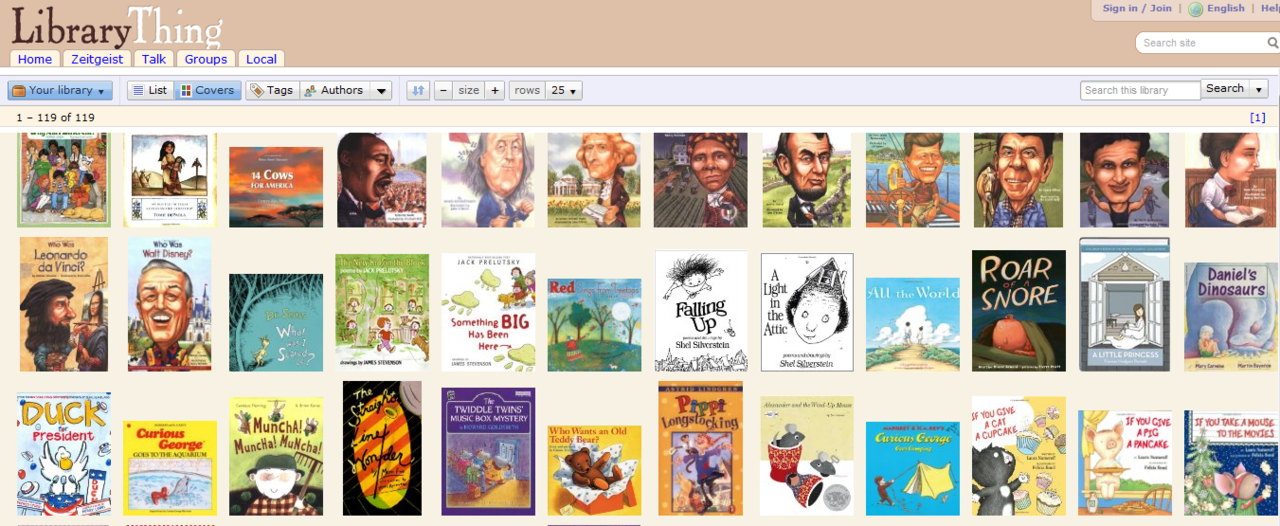
Library Thing is a fantastic tool that allows you to keep track and share books that you own. I’m using it to help me organize and build my classroom library. I love that you can easily view your library by book cover, subject, tags, title, author, even Lexile Classification. Also, you can embed a widget of your library into your blog.
Entering the books is simple, but time consuming. So far, I’m using the tags to help me sort my children’s books into categories such as award winners, themes, and genres. I’ve even created a separate wishlist library for children’s books that I want to purchase. 
Teachers how do you keep track of your classroom library?

Tuesday, May 15, 2012

Setting personal goals in the classroom with Daruma dolls


Daruma Dolls
Students can learn about customs from another culture in this fun goal setting activity.


Daruma dolls are a Japanese good luck symbol. They stand for the spirit of courage and determination. The weighted bottoms and rounded shape forces this ancient cultural doll to right itself after being knocked over, teaching us to be dedicated and persistent and symbolizing our recoveries from misfortune. The Daruma dolls are often given to someone when they start something new. The dolls come with both eyes blank. After purchasing or receiving it as a gift, you paint one eye and make a wish or begin a new project. The second eye is painted when the wish comes true or the project is completed.

In my of my courses the professor invited each of us to set a personal goal for the class using a Daruma doll worksheet. We recorded our goals for the course on the back of our "doll" and colored in one eye. At the end of the course we revisited our goals and if we were successful in accomplishing them we colored in the other eye.

I thought this was a great activity for any age to set personal goals while learning about an interesting Japanese custom. Below is a Daruma doll worksheet.

Directions: What is your goal for this class? Think, decide, and record it on the back of your “doll”. Color in one eye.

Monday, August 1, 2011

CAST Learning Tools


CAST.org strives to provide using UDL (Universal Design for Learning). For instance, the CAST UDL Book Builder allows a teacher to create a digital book to support various types of learners. The students can view the pictures of the book and read along as the computer reads the story aloud. Also, the student can select the text and ask the computer to re-read that section or translate it to to Spanish. You can also read and rate books that were created by other teachers/authors.

The CAST UDL Lesson Builder helps teachers to customize their lessons to meet individual learning needs. I haven't had a chance to play with the lesson builder yet, but I'm eager to test it out.

There are many other Learning Tools at CAST.org and the best part...it's FREE!

Sunday, June 26, 2011

Weird Science!


Here's a fun and interactive site about the human body. My son loves all things science so he got a kick out of this!

Learning how to reflect...


Powerful Learning Practice is one of my favorite teacher sites. I love to read blogs from the Voices from the Learning Revolution. These teacher reflections are inspiring. They have helped me to learn how to reflect on my own learning journey and are helping me to shape my personal teaching philosophy.

Here is my recent favorite posts from the PLP site...

 This summer I won’t be learning how to be a better teacher | Powerful Learning Practice 


I love the idea of staying connected and being a co-learner with my class!