Showing posts with label social studies. Show all posts

Thursday, April 25, 2013

Cultural "Artifakes" and Artifacts

Cultural “Artifake”
In Social Studies, my 3rd graders are learning about primary and secondary sources and cultures of the past and present. To begin our unit we learned about artifacts or any object made by a human being, typically an item of cultural or historical interest. Tools, jewelry, pottery, clothing, toys…all of these are example of artifacts.

To make this lesson meaningful for the students we asked them to share a cultural “artifake” or a fake artifact from their culture. A cultural artifact is anything created by humans that gives information about a culture. Some students created their “artifake” while others used a objects found in their homes. 
                  
We asked the parents to talk to their child about their “artifake” and how it represents their culture. In the classroom we placed all the items in our cultural museum, the student's labeled their "artifake" and included details about where the "artifake" originated.


After learning more about different cultures around the world, the student's interviewed each other about their personal cultures. At this time, they were able to share their "artifakes" with each other. The students were able to make new connections to their culture and the culture of their peers through this activity and the passages in the text.

Saturday, April 20, 2013

Text Features, Text Features...


Text features are parts of text that draw your attention to important information. Some examples of text features include Headings, Photographs, Captions, Print Styles, Illustrations, Charts, and Diagrams. Text features help readers to understand the important parts of the text. They also can help readers to make predictions and set a purpose for reading.

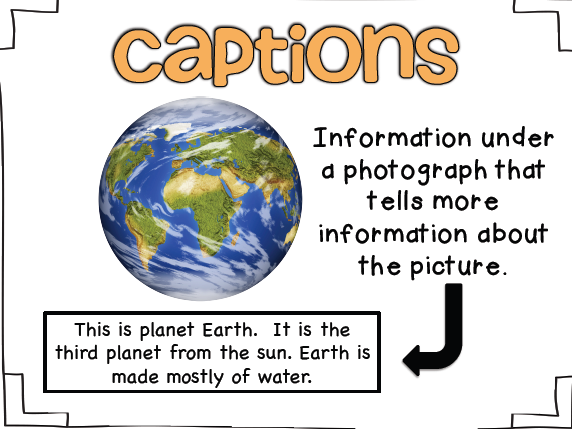
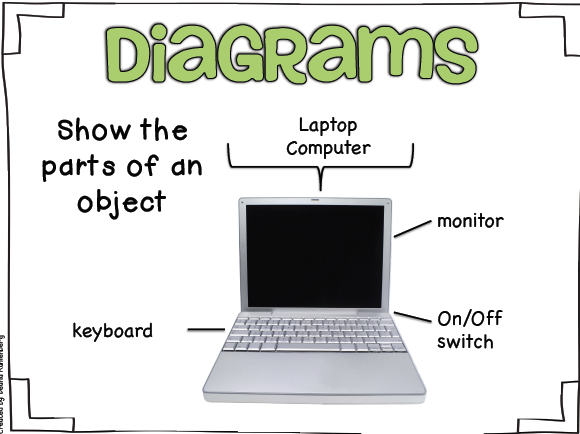
To kick off our unit on text features we introduced different types of text features using posters like the "Captions" and "Diagrams" examples above. After introducing each text feature, the students hunted for the text feature in their Science and Social Studies textbooks. We quickly learned how to identify different types of text features.

We then created a Text Feature Wall, the students worked in groups to find the very best examples of each text feature from various non-fiction magazines. We discussed each text feature and how it was used in the text and then we organized the text features on our Text Feature Wall.


As we read about the Neighbors of the United States in Social Studies, we continued to identify and label the text features in each chapter. We discussed why the authors decided to use the text feature and what was its purpose. For example, a map may help us to learn where things are located or it may help us to understand specific information about a region.


After the students were familiar with text features and their purposes, we used textmapping to help us make predictions and set a purpose for reading. Before reading the next chapter in our Social Studies text, we made copies of the chapter and pasted the pages in order on a long scroll. Then the students worked in groups to identify each text feature using a textmapping key. 


After identifying each text features, the groups labeled their purpose. It was challenging for the students, but we encouraged them to be specific (ie. not to write the purpose of a map, but to write the purpose of the specific map in that chapter).


Once the scrolls were complete the students could "read" the text features to learn about the content in the chapter. The students were impressed with how much you can learn just from "reading" the text features! We were also able to make a lot of predictions about the chapter before we even read it. 

Text features have become part of our daily discussions in Reading, Science, and Social Studies. I love it when the students refer to a chart, sidebar, or any other feature to provide evidence to their conclusions!

Monday, April 1, 2013

Tracking Student Progress...

I'm always looking for meaningful ways to track student progress that are simple to create and utilize in the classroom. Tracking student progress allows both teachers and students to examine increases in knowledge towards a learning goal. Teachers can use multiple informal assessments to quickly assess progress being made on a daily basis and to adjust instruction. Moreover, students are able to make connections to learning goals and their learning progress. Most importantly, however, tracking student progress helps students to take responsibility for their learning. 

During my junior internship, I was able to work with an amazing team of 3rd grade teachers that developed an efficient system to track student progress. For each student, the teacher created cards for each learning goal. The cards included the learning goal, customized scales, and a bar graph for the student to track their progress. 
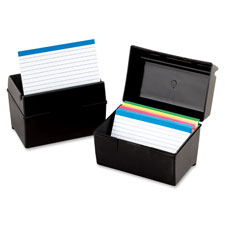
Prior to, during, or after a lesson the students would track their progress. Students would fill in the date, use the scale to determine where they felt that they were in attaining their learning goal, then shade in the bar graph to the corresponding number on the scale. Students used a 3x5 index card box to store their individual tracking progress cards and separated the cards by subject area.  
Once you create the initial set of cards, the system is simple to use and effective. The teachers and students were able to visualize student progress. Also, students could re-visit learning goals throughout the year.  Some students showed that they met their learning goal on their individual bar graphs, but they were not able to demonstrate their knowledge on a formal assessment. Students and teachers can use both the bar graphs and formal assessments to reflect on the student's progress and set new learning goals. The graphs provide great data for teacher/student conferences and/or parent conferences.  

In my senior internship, I used a similar system to track student progress for a various standards units. Below is a Social Studies example. Although I love using individual bar graphs to track student progress, I've learned that we should use a variety of techniques to track students' progress both informally and formally in the classroom.

Friday, August 31, 2012

Prezi Webquest

Last semester I had the opportunity to create a 4th grade Social Studies unit plan about Florida explorers with a group of my peers. We created a Webquest using Prezi (one of my favorite presentation tools). To kick off the unit, we created a Prezi on Christopher Columbus, a familiar explorer for many 4th grade students. During this presentation, the teacher will also model important presentation skills that the students will be assessed on when they present at the end of the unit. After the Christopher Columbus presentation, the students will break up into groups and learn about a Florida explorer. Students will use teacher approved websites using diigo, graphic organizers, and various multimedia tools to create a presentation about their explorer. Throughout their learning journey the student groups will follow the step by step directions stated on the Prezi Webquest. The entire unit plan, including printables and other resources can be found here: http://ucfgr4flexplorerssp12t.wikispaces.com/ Although we tried to plan our activities across the curriculum, looking back it is apparent that we had too many activities for a 5 day unit plan. In the real classroom this unit would require 2-4 weeks. Overall, completing this unit plan was a great experience. I learned so much from this project and my peers. I cannot wait to put these ideas into action in a real classroom.

UPDATE: After completing our course, my peers and I had the opportunity to present our unit plan at our university. Below is the Prezi we created for the workshop.

Thursday, August 16, 2012

Vietnam, A Cultural Handbook

As an educator it is important we become aware of the wide diversity within various cultural groups. Teachers must utilize cultural information without depending upon stereotypes and preconceived ideas concerning cultural characteristics to instruct students. I had the opportunity to work with a group of my peers to study one of the fastest growing populations in Central Florida, the Vietnamese culture. This Cultural Handbook is written for educators about the Vietnamese culture.

Tuesday, June 12, 2012

KB...Konnected

banner

Have you been to kb...konnected? It's one of my favorite teacher blogs! KB is constantly posting useful teacher resources. Many of educational websites she has shared have become my kid's favorite places to play online. She also posts tons of freebies and great printables. Check it out!

Tuesday, May 15, 2012

Setting personal goals in the classroom with Daruma dolls


Daruma Dolls
Students can learn about customs from another culture in this fun goal setting activity.


Daruma dolls are a Japanese good luck symbol. They stand for the spirit of courage and determination. The weighted bottoms and rounded shape forces this ancient cultural doll to right itself after being knocked over, teaching us to be dedicated and persistent and symbolizing our recoveries from misfortune. The Daruma dolls are often given to someone when they start something new. The dolls come with both eyes blank. After purchasing or receiving it as a gift, you paint one eye and make a wish or begin a new project. The second eye is painted when the wish comes true or the project is completed.

In my of my courses the professor invited each of us to set a personal goal for the class using a Daruma doll worksheet. We recorded our goals for the course on the back of our "doll" and colored in one eye. At the end of the course we revisited our goals and if we were successful in accomplishing them we colored in the other eye.

I thought this was a great activity for any age to set personal goals while learning about an interesting Japanese custom. Below is a Daruma doll worksheet.

Directions: What is your goal for this class? Think, decide, and record it on the back of your “doll”. Color in one eye.