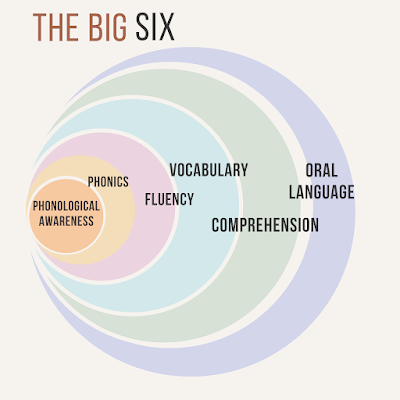
Fluency
Fluency is the ability to read with reasonable accuracy, appropriate rate, and suitable prosody (expression). Reasonable accuracy should be at least 95% for most independent reading, 97-98% for emerging readers, and 100% at the instructional level. It is important that beginning readers are provided texts with phonics patterns that have been pre-taught and the learner has had time to practice, rather than texts that are too difficult for them. On the instructional level, studies show that it is beneficial to correct errors as they occur, therefore reasonable accuracy at this level should be 100%. Fluent reading should sound like speech. Achieving an appropriate rate helps learners to understand what they are reading. A good guide for an appropriate rate of fluency is the 50 percentile of the Fluency Norms created by Dr. Hasbrouck and Dr. Tindal (Florida B.E.S.T. Standards ELA, p. 209). Suitable expression includes pitch, tone, volume, emphasis, and rhythm. It typically mirrors spoken language and conveys meaning.
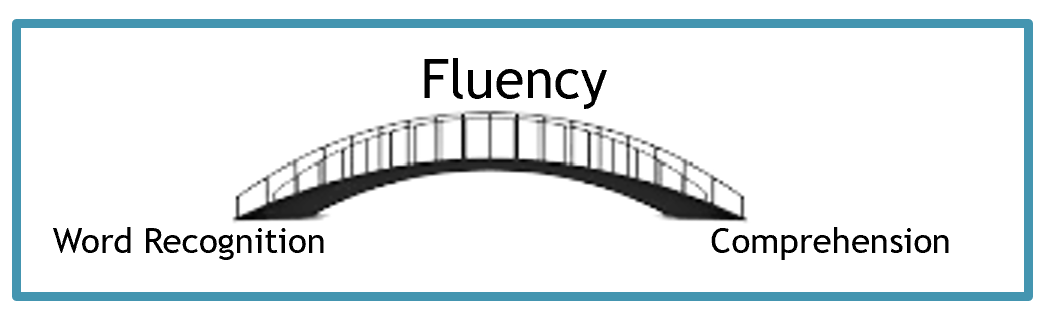
Reading fluency is important because it provides a bridge between word recognition and comprehension (Reading Rockets). Let’s compare learning to read to learning to play the piano. Think about a child who is first learning about finger placement and the notes on the piano. Initially, the piano playing may sound very clunky and the player is focused on finding the correct key. Through practice, the pianist builds automaticity and eventually the notes are less clunky, have a nice rhythm, and sounds like music!
On Scarborough’s Reading Rope, word recognition could be compared to learning the notes and finger placement on a piano. Phonological awareness and phonics teaches the reader the skills necessary for reading words. Beginning readers are focused on applying this knowledge to read words correctly. These skills build reading accuracy. Once those skills become automatic and the reader has an appropriate reading rate, the reader can focus on making meaning from what they are reading. Additionally, since fluent readers are able to focus more on meaning and less on decoding, they tend to read more and remember more of what they read (How Reading Fluency affects Comprehension).
There are a variety of strategies to help student’s practice fluency including repeated readings, partner reading, multiple exposure to challenging words (think: photosynthesis), reader’s theater, or poetry. I do think it's important to note that phonemic awareness and phonics is part of fluency instruction since it helps reader to read accurately.
Vocabulary
Reading to learn requires the ability to make meaning from the words. This is where vocabulary comes into play. Vocabulary is a students’ knowledge of words and word meanings. Studies have shown that students with a strong oral language vocabulary in primary grades had stronger reading comprehension scores in later years (AIM Pathways to Proficient Reading).
Every learner will have varying levels of word knowledge based on their individual experiences and background knowledge. Literacy experts have described the levels of word knowledge by breadth, depth, and fluency. Breadth refers to how many words a learner recognizes or knows at a certain level; depth refers to how well a learner knows a word; and fluency refers to the rate in which a learner can access meaning of a word. With this knowledge in mind, effective teaching strategies of vocabulary go beyond memorization of definitions. Effective vocabulary instruction requires repeated exposure to a wide range of words and many opportunities to connect those words to a variety of experiences and other word meanings. Additionally, studies have shown that direct instruction in morphology or, analyzing meaningful word parts, is beneficial in developing vocabulary knowledge.


